
Safety Tips for Driving in the Dark
As the sun sets earlier, more of your miles happen in the dark. From poor visibility to impaired drivers, night driving brings risks you don’t deal with at noon, and in a 80,000-pound truck, the margin for error is even smaller. Here are our nine tips to keep yourself and the motoring public safe.
Keep Your Truck Clean
Clean your windshield inside and out, plus your mirrors and headlight lenses. A film you’d never notice during the day turns into a blinding glare when headlights hit it at night.
Light Check
Make sure your headlights, taillights, clearance and marker lights all work and are aimed properly, so you can see and be seen without blinding other drivers. If your lenses are hazy, a headlight restoration kit is a cheap fix. And check that the reflective tape on your trailer is clean and not peeling.
Don’t Look Into the Light
When oncoming headlights are blinding, shift your eyes to the right edge of your lane or the fog line until they pass. Use your high beams on dark, empty roads, and dim them within 500 feet of an oncoming vehicle or one you’re following.
Eyes on Your Surroundings
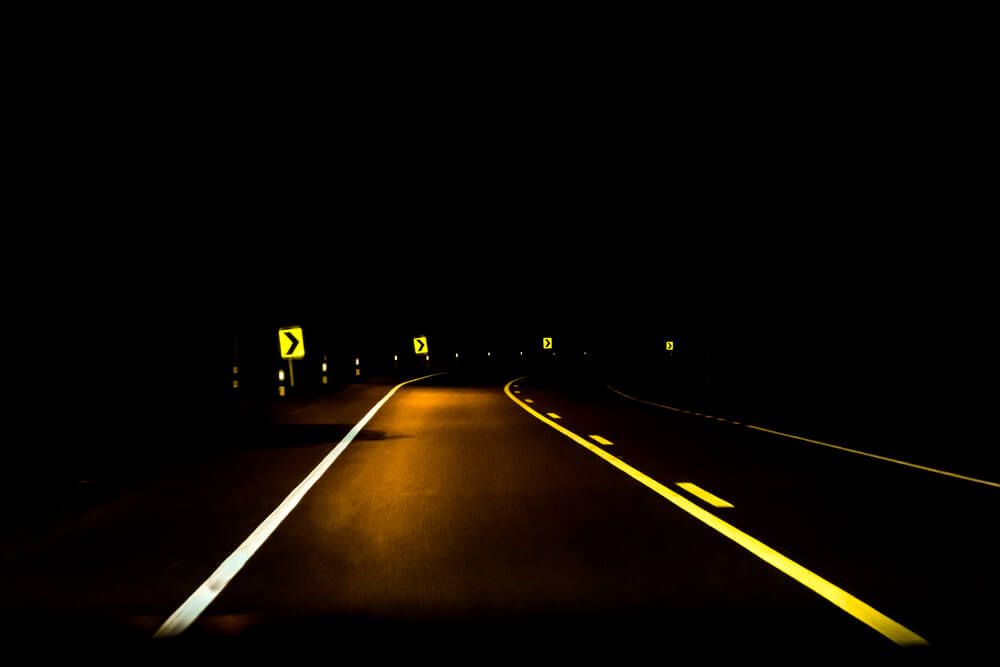
Animals, pedestrians, impaired drivers, even traffic signs are all harder to see at night. Check your mirrors often and take your time at intersections. Deer are most active as dawn and dusk, especially in the fall, so scan the shoulder for eyes reflecting your lights on rural stretches like I-80.
Stake Awake
Many drivers like running at night because the roads are less crowded, but it’s important to listen to your body. Get the rest you need before you roll, because your body may still expect to sleep once it gets dark. The early-morning hours, roughly 2 to 6 a.m., are when drowsiness hits hardest.
Know what kind of driver you are. Do you like leaving right after rush house and driving into the night, or are you better rolling out at the darkest hour and driving into the sunrise? Plan around it. And know the warning signs: yawning, heavy eyelids, drifting out of your lane, or missing an exit. Coffee buys you time, but it doesn’t fix tired. Pull over and rest.
Keep Your Eyes Healthy and Happy
Get regular eye exams, and if you have prescription glasses, wear the,. Lenses with an antireflective coating help cut glare at night. Inside the cab, dim your dash and screen, since a bright display makes it harder for your eyes to adjust to the dark road.
Reduce Distractions
Taking your full attention off the road, even for a split second, can cause some serious damage. That’s true during the day too, but the risk goes up at night. Put the phone away, save meals for your break, and set your radio or music before you pull out.
Distance and Speed Management
When darkness cuts your vision and reaction time, give yourself more room. Increase your following distance compared to what you’d use during the day, and don’t overdrive your headlights. Low beams light up 250 feet ahead, so if you can’t stop within what you can see, slow down.
Be Seen
Safety doesn’t stop at the cab door. When you’re pulled over, turn on your hazards, set out your reflective triangles, and wear a reflective vest or jacket whenever you’re outside the truck.
For more safety tips, check out our latest news. Looking for a carrier that puts driver safety first? See our driving jobs or call recruiting at 800-525-1969.
FAQ
What time of night is most dangerous to drive?
The early-morning hours, roughly 2 to 6 a.m., are when drowsiness hits hardest.
When should truck drivers dim their high beams?
Within 500 feet of an oncoming vehicle or a vehicle you’re following.
How do you reduce headlight glare at night?
Keep your windshield clean inside and out, dim your dash lights, and look toward the right edge of your lane when oncoming lights are bright.